

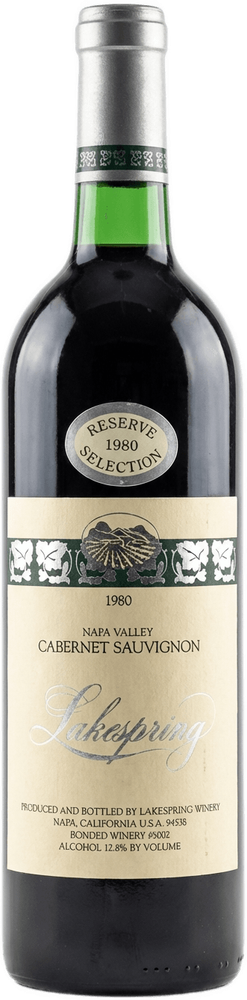
Library Selection Cabernet Sauvignon (1980)
SommeliAI Insights
A mature Napa Valley Cabernet Sauvignon with complex flavors and a smooth finish.
About this wine
The 1980 Lakespring Cabernet Sauvignon from Napa Valley offers a remarkable tasting experience, showcasing the depth and complexity that comes with over four decades of aging. Upon pouring, it presents a deep ruby color, indicative of its maturity. The nose is greeted with aromas of dried berries, forest floor, and subtle earthy notes, reflecting the wine's evolution over time. On the palate, flavors of dark cherry and blackcurrant are complemented by hints of leather and tobacco, adding layers of complexity. The tannins have softened beautifully, resulting in a smooth and lingering finish. This wine is a testament to the longevity and aging potential of Napa Valley Cabernet Sauvignons from this era.
About the grape
Cabernet Sauvignon, a grape variety that emerged in France in the 17th century from a natural cross between Cabernet Franc and Sauvignon Blanc, is renowned for its thick skins and hardy vines, making it adaptable to various climates. In Napa Valley, the grape's journey began in the mid-1800s when H.W. Crabb planted it in the To Kalon Vineyard, marking the start of its prominence in the region. The 1976 Judgment of Paris was a pivotal moment, where Napa's Cabernet Sauvignons outperformed esteemed French wines, solidifying the valley's reputation as a premier wine-producing area. By 1980, when the Lakespring Library Selection Cabernet Sauvignon was produced, Napa's dedication to cultivating high-quality Cabernet Sauvignon had firmly established the region as a leader in the wine industry.
Quick facts
- 🍇 The 1980 vintage in Napa Valley was marked by cooler temperatures, resulting in wines with higher acidity and more restrained fruit flavors, contributing to their longevity.
- 🇫🇷 Cabernet Sauvignon, the grape variety used in this wine, is a natural cross between Cabernet Franc and Sauvignon Blanc, originating in Bordeaux, France.
- 🌿 The term 'Sauvignon' in Cabernet Sauvignon is derived from the French word 'sauvage,' meaning 'wild,' reflecting the grape's origins.
- ☀️🌙 Napa Valley's Mediterranean climate, characterized by warm days and cool nights, provides ideal conditions for growing Cabernet Sauvignon, enhancing the grape's complexity.
- 🕰️ Cabernet Sauvignon is known for its high tannin content, which contributes to the wine's structure and aging potential, allowing it to develop complex flavors over time.
Palate profile
Producer
Lakespring Winery, established in the early 1980s by the Battat family, was located in Napa Valley, California. The winery gained recognition for producing high-quality, fruit-forward wines, particularly under the guidance of winemaker Randy Mason, who crafted notable vintages like the 1981 Cabernet Sauvignon. Despite its quality offerings, Lakespring remained relatively under the radar compared to other Napa wineries. The winery ceased operations in the late 1990s, but its wines from the 1980s and 1990s are still sought after by collectors today.
