

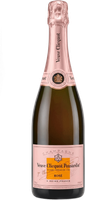
Brut Rosé
SommeliAI Insights
A vibrant rosé Champagne with lively red fruit flavors and a crisp, elegant finish.
About this wine
Veuve Clicquot Brut Rosé presents a luminous pink hue with coppery highlights. On the nose, it offers generous aromas of fresh red fruits like raspberry, wild strawberry, cherry, and blackberry, complemented by subtle notes of biscuit, almond, and brioche. The palate is well-structured and full-bodied, delivering a harmonious blend of fruitiness and refreshing acidity. This Champagne is crafted from a blend of 50% Pinot Noir, 20% Pinot Meunier, and 30% Chardonnay, with the addition of 12% still red wine, a method pioneered by Madame Clicquot in 1818 to create the first known blended rosé Champagne. Aged for a minimum of three years in chalk cellars, it achieves depth and complexity, culminating in a long, elegant finish.
About the grape
In 1818, Madame Clicquot pioneered the first known blended rosé Champagne by adding still red Pinot Noir wine from her Bouzy vineyards to her traditional white Champagne, a method still widely used today. This innovation highlighted the versatility of Pinot Noir, which provides structure and depth, while Pinot Meunier adds roundness, and Chardonnay contributes elegance and finesse to the blend. Madame Clicquot's approach not only enhanced the flavor profile but also set a new standard for rosé Champagne production.
Quick facts
- 🍷 Madame Clicquot created the first known blended rosé champagne in 1818 by adding still red wine to her sparkling white wine, a method still used today.
- 🍇 Veuve Clicquot's Brut Rosé is crafted from a blend of 50% Pinot Noir, 30% Chardonnay, and 20% Meunier, sourced from 50 to 60 different crus.
- ⏳ The champagne undergoes a minimum of three years of aging in the house's chalk cellars, contributing to its depth and complexity.
- 💪 The addition of 12% red wine from Bouzy imparts depth and power to the Brut Rosé, enhancing its rich aromatic profile.
- 🏷️ Veuve Clicquot's distinctive yellow label, introduced in 1877, was created to distinguish its dry champagnes from the sweeter ones popular at the time.
Palate profile
Producer
Veuve Clicquot, founded in 1772 in Reims, France, gained prominence under Madame Clicquot, who took over the business in 1805 at age 27. She pioneered several champagne-making innovations, including the invention of the riddling table in 1816, which revolutionized the production process by clarifying the wine. In 1818, she created the first known blended rosé champagne by adding still red wine to the sparkling white, a method still widely used today. The house's distinctive yellow label, introduced in 1877, became a symbol of quality and innovation in the champagne industry.
