

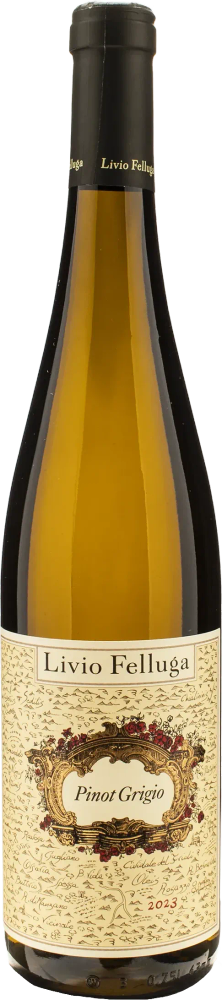
Pinot Grigio (2022)
SommeliAI Insights
A refined Pinot Grigio with bright fruit flavors and a crisp finish.
About this wine
This Pinot Grigio presents a brilliant yellow color with subtle coppery highlights, a nod to the grape's pinkish skins. The nose is complex and inviting, offering aromas of white flowers, ripe apricot, and a hint of citrus zest. On the palate, it is crisp and well-structured, featuring flavors of pear, melon, and a touch of honey. The wine's balanced acidity and minerality lead to a refreshing, lingering finish. Notably, Livio Felluga's meticulous winemaking process, including fermentation in stainless steel and aging on the lees, enhances its elegance and depth.
About the grape
Pinot Grigio, a mutation of Pinot Noir, is known for its pinkish-gray grapes and thrives in cooler climates. Livio Felluga, a renowned producer from Friuli, Italy, cultivates this variety on hillside vineyards with marl and sandstone soils, enhancing the grape's minerality. The 2019 Livio Felluga Pinot Grigio is crafted using traditional methods, including hand-picking grapes and fermenting in stainless steel tanks, to preserve the grape's natural elegance.
Quick facts
- 🍷 Livio Felluga's Pinot Grigio is renowned for its bright, brilliant old gold color with light coppery hues, a signature characteristic of the varietal.
- 🍑 The wine's nose is subtle and vibrant, offering hints of apricots and white peaches, complemented by notes of orange zest and fresh spices.
- 🍈 On the palate, it presents a nicely structured progression with fresh sensations of cantaloupe, papaya, Golden Delicious apples, apricots, and sage.
- 🍋 The lingering, tangy finish features citrussy notes, making it particularly refreshing.
- 🌄 Livio Felluga's Pinot Grigio is produced in the Friuli Colli Orientali D.O.C. region, known for its unique marl and sandstone soil composition, contributing to the wine's distinctive minerality.
Palate profile
Producer
Livio Felluga, born in 1914 in Isola d'Istria, established his eponymous winery in 1956 in the Friuli-Venezia Giulia region of northeastern Italy. After World War II, he revitalized abandoned hillside vineyards in Rosazzo, pioneering modern winemaking techniques and focusing on quality production. His innovative approach included introducing single-varietal bottlings and creating the iconic 'Geographical Map' label in 1956, symbolizing his deep connection to the land. Today, the winery spans over 187 hectares, producing renowned wines that reflect the unique terroir of the region.
