

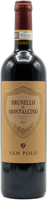
Brunello di Montalcino (2018)
SommeliAI Insights
San Polo Brunello di Montalcino 2018 is a pure Sangiovese red with sour cherry, plum, rose and earthy notes, framed by fresh acidity and firm, grippy tannins.
About this wine
San Polo’s 2018 Brunello di Montalcino is made from 100 percent Sangiovese grown in the Montalcino zone of Tuscany, and it shows the variety’s classic mix of red fruit and savory complexity. Aromas lean toward sour cherry, plum and dried herbs, with added tones of rose, cedar, spice, iron and a forest floor note. The palate is medium to full in body, with bright acidity, a tightly knit core of fruit, and tannins that feel burly and structured rather than sweet. Vinification is done with fermentation in cement tanks, followed by aging for about 30 months in large oak casks, then at least 6 months in bottle before release. The estate sits on the southeastern side of the denomination, where breezes from the direction of Monte Amiata help keep the vineyards ventilated. By Brunello di Montalcino DOCG rules, the wine must age for years before it can be sold, with a required minimum time in oak and a release date no earlier than January 1, 2024 for the 2018 harvest.
About the grape
Brunello di Montalcino is required by its DOCG rules to be made only from Sangiovese, which locals have long called Brunello, so the 2018 San Polo bottling is a single varietal expression of that grape. Sangiovese is Tuscany’s workhorse red, first recorded in writing in 1590 as sangiogheto, and in Montalcino it is traditionally grown as the local biotype often referred to as Sangiovese Grosso, the selection that helped define long lived Brunello in the nineteenth century. At San Polo the Sangiovese for Brunello is farmed on high hillside sites around 450 metres, on marl and mineral soils with a strong clay component, and trained largely to spurred cordon to manage vigor and ripening. That mix of a strict single grape appellation and careful clonal and site choices is why producers like San Polo can focus the wine on the structure and reliability that made Sangiovese in Montalcino famous.
Quick facts
- 🏅 San Polo was the first winery in Tuscany and the second in the world to earn CasaClima Wine certification, a sustainability standard it achieved in 2013.
- 🕳️ The winery’s cellar was designed as eco architecture and built completely underground, using natural cooling and air circulation to reduce energy use.
- 🤝 The estate behind this 2018 Brunello was purchased in 2007 by Marilisa Allegrini, in a joint deal with U.S. importer Leonardo Lo Cascio (Winebow).
- ⛰️ San Polo’s vineyards sit in the south eastern Montalcino area of Podernovi at around 450 meters altitude, giving this Brunello a distinctly high hillside origin within the DOCG.
- 🧱 For the 2018 Brunello, grapes are hand picked in small 17 kg crates and the wine ferments in concrete before a long aging of about 30 months in large oak casks, with at least 6 more months in bottle.
Palate profile
Producer
San Polo is an estate in the Podernovi area of Montalcino, where the first vines were planted in 1990 and later expanded with higher density plantings. In 2005 the winery built a largely underground, bioarchitecture focused cellar designed to work fruit from sustainably managed vineyards. Marilisa Allegrini acquired the property in 2007, and the estate has since been shaped by a quality driven, environmentally minded approach. In 2013 the cellar received CasaClima Wine certification, and the vineyards moved to organic protocols in 2014, earning official organic certification in 2017.
