

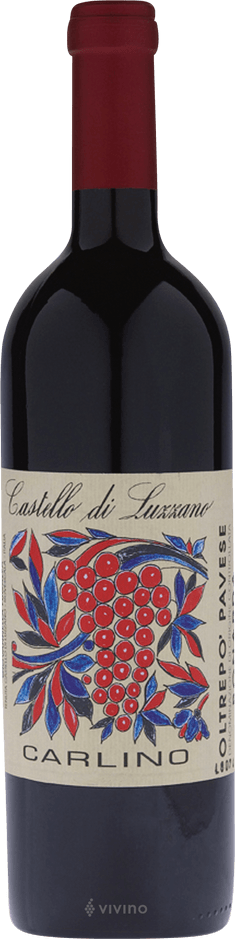
Carlino Bonarda dell’Oltrepò Pavese (2006)
SommeliAI Insights
A mature Oltrepò Pavese Croatina with deep ruby color, violet and dark fruit aromas, and a dry, full bodied palate with a hint of black pepper on the finish.
About this wine
This red from Castello di Luzzano’s Carlino bottling is made entirely from Croatina, locally known as Bonarda, grown on marl and limestone slopes in the Oltrepò Pavese hills of Lombardy. In the glass the 2006 shows a deep ruby core that has started to pick up garnet reflections with age. The nose offers intense violet and dried rose notes layered with blackberry, plum, black cherry and a touch of earthy spice, in line with more recent vintages that are noted for violet and spicy aromas as well as dark berry fruit. On the palate it is dry and full bodied, with moderately firm tannins that have softened over time, giving a broad and supple texture while still carrying flavors of ripe black fruits, cocoa and black pepper toward a long finish. The wine is traditionally fermented with extended skin contact to extract color and structure, then aged in stainless steel tanks in the estate’s historic cellars, which preserves the fresh fruit profile while allowing the natural tannins and acidity to support long aging. As a well kept 2006, it now drinks in a more savory and integrated style, with tertiary notes of leather and tobacco emerging alongside the remaining dark fruit, showing how this Croatina from a historic single vineyard can evolve gracefully over many years.
About the grape
Carlino is made from Croatina, a native red grape of northern Italy that has been grown for centuries in Lombardy and nearby regions under the local name Bonarda. In Oltrepò Pavese Croatina traditionally gives deeply colored, firmly structured wines and at Castello di Luzzano it comes from a historic estate vineyard that the family highlights with this single variety bottling. The vines for Carlino are planted on calcareous marl soils at around 210 meters above sea level and are farmed with sustainable methods to keep yields moderate and fruit healthy. The grapes are typically destemmed and fermented to dryness then aged in stainless steel which preserves Croatina’s naturally robust character and allows this local variety to speak clearly of its hillside site.
Quick facts
- 🕵️ Carlino is a Bonarda dell’Oltrepò Pavese wine made from the Croatina grape which locals simply call Bonarda so many drinkers never realize they are tasting Croatina at all
- 🏰 The name Carlino comes from a historic estate vineyard at Castello di Luzzano whose vines are some of the oldest Croatina plantings on the property
- 🧭 The Carlino vines grow on a hill that marks the exact border between Lombardy and Emilia Romagna so this red is jokingly described at the estate as a citizen of two regions
- 🏺 Archaeological digs around the Carlino vineyards uncovered Roman era farm remains and ancient wine tools meaning wine has been produced on this slope for around two thousand years
- 🎭 Carlino is part of a whimsical line up of wines created by owner Giovannella Fugazza who left a career in law to reinvent herself as a storyteller winemaker giving each label a playful personality
Palate profile
Producer
Castello di Luzzano, located on the border between Lombardy and Emilia-Romagna in Italy, boasts a winemaking tradition spanning over two millennia. Archaeological excavations have uncovered remnants of a Roman agricultural villa from the 1st century AD, indicating early viticulture in the area. The estate has been under the stewardship of the Fugazza family since the early 1900s, with sisters Maria Giulia and Giovannella Fugazza revitalizing the winery in the 1980s. Today, Giovannella continues to manage the estate, blending historical heritage with modern winemaking practices.
