

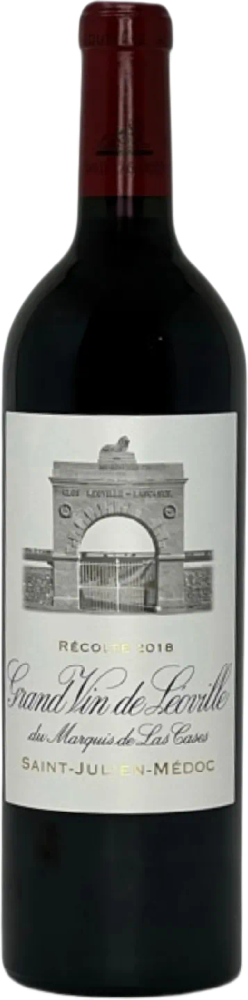
Grand Vin de Léoville du Marquis de Las Cases (1988)
SommeliAI Insights
Deep garnet Saint Julien with black cherry, cedar, and savory tobacco notes, showing polished tannins and long mineral finish.
About this wine
The 1988 Grand Vin from Léoville Las Cases opens with aromas of black cherry, cedar box, dried plum, and a hint of rose petal. On the palate it shows ripe cassis and plum, supported by fresh acidity and firm but polished tannins that give the wine a direct, driving texture. Secondary notes of cigar box, forest floor, and savory tobacco appear with air, and a subtle spice and mineral thread carries through the long finish. The blend was dominated by Cabernet Sauvignon with Merlot, Cabernet Franc and a small amount of Petit Verdot, and the estate reports an October harvest with traditional fermentation and élevage in oak barrels. Historically critics have praised this bottle for avoiding the harsh vegetal character of some 1988s, and it has been described as mature yet lively with several decades of cellaring potential when stored properly.
About the grape
Cabernet Sauvignon, the backbone at about two thirds of the 1988 blend, is a Bordeaux native known for late ripening and thick skins, and at Las Cases it is planted on the gravelly Grand Clos parcels to give structure and longevity. Merlot provides the softer middle component, grown lower on the slopes and in deeper clay pockets so it can ripen earlier in cooler seasons and add roundness to the wine. Cabernet Franc contributes aromatic lift and savory complexity, coming from older vines within the estate that are trained and managed for lower yields to preserve concentration. Petit Verdot is used in small amounts for color and spicy tannin, it is planted sparingly on the warmest plots and brought into the final blend only when it reaches full phenolic ripeness.
Quick facts
- 🏅 The 1988 Grand Vin was widely celebrated by critics and is often singled out as one of Las Cases’ most charismatic late-1980s releases, with reviewers saying it even bests the 1989 in charm.
- 🌊 Léoville Las Cases’ flagship vineyards neighbor Château Latour and the two properties are divided by the tiny Juillac stream, a geographic quirk that gives the 1988 Grand Vin a famously ‘next-door-to-Latour’ pedigree.
- 🦁 Much of the fruit for the Grand Vin comes from the Grand Clos, a rare 50-hectare walled parcel on the estate; bottles like the 1988 carry a bit of that ‘walled-garden’ mystique.
- 👑 By tradition the Delon family has run Las Cases since 1950 and in the late 20th century the estate routinely kept a relatively small proportion as Grand Vin (roughly around 40%), so a 1988 bottle represents a carefully selected, collectible slice of the vintage.
- 🎬 The château has become a cultural reference point beyond the winery — its fame is such that Léoville Las Cases bottles are used as visual wine-identification touchstones in French cinema and anecdotes, adding a playful pop-culture legacy to bottles like the 1988.
Palate profile
Producer
Château Léoville Las Cases, located in the Saint-Julien appellation of Bordeaux, France, is one of the oldest estates in the Médoc region. Originally part of a vast estate known as Domaine de Léoville, it was divided during the French Revolution, leading to the creation of Château Léoville Las Cases, Château Léoville Barton, and Château Léoville Poyferré. The estate has been managed by the Delon family since the late 19th century and is currently overseen by Jean-Hubert Delon. Notably, in 1976, the 1971 vintage of Château Léoville Las Cases ranked sixth among ten French and Californian red wines in the historic "Judgment of Paris" wine competition. The estate's vineyards are situated adjacent to those of Château Latour in Pauillac, separated only by the Juillac tributary.
